

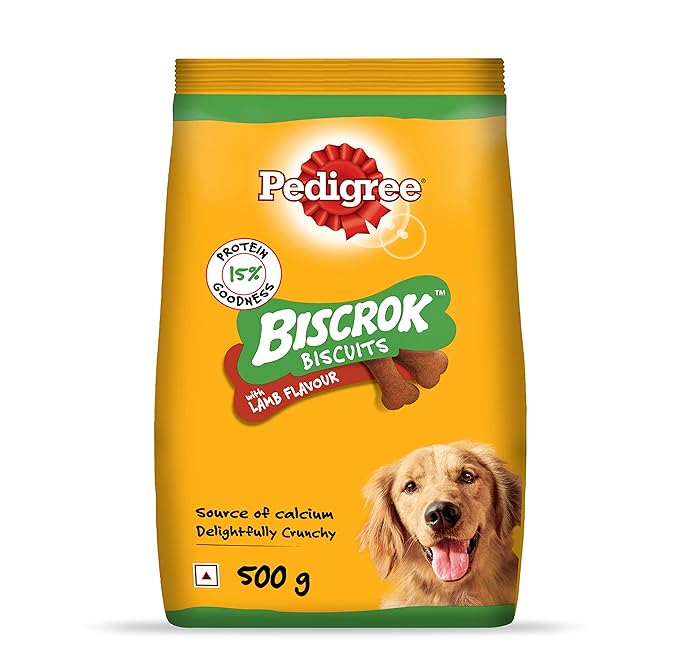
Dog treats for training crunchy and delicious, these dog biscuits are packed nutrients to support pet’s health training rewards or daily treats,
Pedigree Biscrok Biscuits (Above 4 Months) Dog Treats, Lamb Flavour, 500 g, Source of Calcium, Goodness of 15% Protein
Original price was: ₹200.00.₹174.00Current price is: ₹174.00.
Description
About this item
Dog treats for training biscuit form treats
- DELICIOUS FLAVOUR: Pedigree Biscrok Biscuits Dog Treats in Lamb Flavour, are crunchy & nutritious biscuits that delight your dog
- QUALITY INGREDIENTS: This treat provides essential nutrients, such as vitamins and minerals, for a healthy & energetic life
- TAILOR-MADE NUTRITION: These tasty bone-shaped dog treats contains goodness of 15% protein and it is source of calcium
- HEALTH BENEFITS: When fed as per feeding guidelines, these treats help meet 10% of your dog’s energy requirements
- SUITABLE FOR: It is suitable for all dog breeds over 4 months of age & perfect for daily training sessions or as a small snack between meals
-
Introduction
Training a dog requires patience, consistency, and most importantly, motivation. Dogs, being food-driven creatures, respond exceptionally well to tasty rewards that reinforce good behavior. Among the various training aids available, dog treats for training biscuit form treats stand out as one of the most effective and versatile options. These specially crafted biscuits not only serve as delicious rewards but also contribute to a dog’s overall nutrition and well-being.
For pet parents, the challenge often lies in finding a balance between treats that dogs love and options that are healthy and safe for daily use. With dog treats for training biscuit form treats, this balance is easily achieved. These treats are designed to be small, crunchy, and packed with flavor, making them perfect for repeated use during training sessions without adding excessive calories to the diet.
Why Biscuits for Training?
The biscuit form is particularly advantageous for several reasons:
-
Portion Control – Small, bite-sized biscuits make it easy to reward dogs multiple times without overfeeding.
-
Crunchy Texture – Dogs love the satisfying crunch, which also helps clean their teeth and reduce plaque buildup.
-
Convenience – Unlike wet or sticky treats, biscuits don’t leave residue on hands or training pouches.
-
Long Shelf Life – Properly packaged, biscuit treats remain fresh for extended periods, making them economical for regular training use.
Because of these benefits, dog treats for training biscuit form treats are trusted by trainers, behaviorists, and pet owners worldwide.
Nutritional Advantages
Many pet parents worry about giving their dogs too many treats. Fortunately, modern biscuit treats are often formulated with wholesome ingredients such as whole grains, lean proteins, and natural flavors. Common features include:
-
High-Quality Protein – Chicken, lamb, fish, or turkey provide energy and support muscle development.
-
Whole Grains – Oats, barley, or brown rice add fiber and aid digestion.
-
Fortified Nutrients – Added vitamins and minerals support immunity, coat health, and joint strength.
-
Low Fat Content – Designed for frequent use without causing weight gain.
These qualities make dog treats for training biscuit form treats more than just a reward—they’re a supplementary part of a healthy diet.
Training Efficiency
Training is all about timing and consistency. When using dog treats for training biscuit form treats, owners can quickly reinforce desired behaviors. For example:
-
Basic Commands – Sit, stay, come, and down become easier to teach with immediate biscuit rewards.
-
Leash Training – Rewarding calm walking behavior encourages dogs to stay focused.
-
Behavior Correction – Redirecting unwanted habits like jumping or barking can be reinforced positively with treats.
-
Agility and Advanced Skills – Biscuit treats provide motivation during complex training activities.
The small size and high palatability of these biscuits make them ideal for repetitive use during a single session, ensuring dogs remain engaged without becoming full or distracted.
Flavor Options
Dogs, like humans, enjoy variety. That’s why dog treats for training biscuit form treats come in multiple flavors, such as:
-
Chicken – The most popular and universally loved.
-
Beef – Rich and savory, appealing to strong-chewing breeds.
-
Peanut Butter – A favorite for picky eaters.
-
Fish-Based – Excellent for dogs with sensitivities to common proteins.
-
Vegetable-Infused – Blended with carrots, spinach, or sweet potatoes for added nutrients.
By offering multiple flavors, pet owners can keep training sessions exciting and prevent treat fatigue.
Health and Safety
Safety is a top concern when choosing training treats. Dog treats for training biscuit form treats are crafted to be:
-
Free from harmful additives like artificial preservatives, colors, or flavors.
-
Easily digestible, even for sensitive stomachs.
-
Balanced in calories, ensuring dogs can enjoy frequent rewards.
-
Available in grain-free options for pets with allergies.
For puppies, there are softer biscuit options that are gentle on developing teeth, while senior dogs can enjoy low-fat biscuits that support joint health.
Dental Benefits
The crunchy texture of dog treats for training biscuit form treats naturally scrubs teeth, reducing tartar and plaque. Regular use can contribute to fresher breath and overall oral hygiene. Many brands even add natural breath fresheners like parsley or mint to further enhance dental care.
Bonding and Positive Reinforcement
Training is not just about teaching commands—it’s about building trust and strengthening the bond between pet and owner. Every time a dog receives dog treats for training biscuit form treats, they associate their owner’s voice and actions with positive experiences. This deepens loyalty and makes training an enjoyable activity for both parties.
Versatility in Use
Beyond traditional training, these biscuits can be used for:
-
Puzzle Toys – Inserting biscuits into interactive toys keeps dogs mentally stimulated.
-
Travel Rewards – Handy snacks for long car rides.
-
Socialization – Offering biscuits during introductions with other pets or people.
-
Post-Exercise Treats – A quick energy boost after walks or play sessions.
This versatility makes dog treats for training biscuit form treats a multipurpose investment in canine care.
Testimonials and Experiences
Dog owners often share stories of how biscuits transformed their training experiences:
-
“My Labrador responds instantly when I bring out the biscuit bag—he learned ‘stay’ in just two days.”
-
“I struggled with leash pulling until I used biscuit form training treats. Now our walks are stress-free.”
-
“My senior Beagle is picky, but the crunchy peanut butter flavor is her absolute favorite.”
These testimonials prove the effectiveness and universal appeal of biscuit training treats.
Economic and Practical Value
A bag of dog treats for training biscuit form treats typically contains dozens to hundreds of small biscuits, making them cost-effective for daily use. Compared to larger chews or gourmet snacks, biscuits offer more rewards per purchase, giving owners greater value for money.
Additionally, their non-messy nature means no sticky hands, no lingering odors, and easy storage in treat pouches, making training sessions smooth and efficient.
-
-
Training does not stop at the basics. Once a dog has mastered commands like “sit” and “stay,” more complex skills can be introduced. Agility courses, scent detection games, service dog tasks, and even competitive obedience require focus, stamina, and motivation. In these settings, dog treats for training biscuit form treats provide the perfect reinforcement tool. Their convenient size allows for frequent rewards without slowing down progress. Handlers can carry dozens of biscuits during a session, ensuring dogs remain attentive and eager.
For example, agility training often requires dogs to complete obstacles in quick succession. Using biscuits as an immediate reward at the end of each run helps solidify learning while maintaining high excitement levels. Similarly, scent detection tasks—used in both sports and service training—benefit from quick, crunchy treats that can be dispensed instantly.
The Psychology of Reward
Dogs are motivated by instinct, smell, and positive associations. Studies in canine psychology show that dogs learn best through immediate reinforcement. When a behavior is followed by a desirable outcome within seconds, the connection becomes strong and lasting. This is where dog treats for training biscuit form treats excel.
Unlike bulky chews that take minutes to consume, biscuits provide quick satisfaction. The crunch, flavor burst, and ease of chewing create an instant positive feedback loop. Over time, dogs begin to anticipate success when they hear the training command, knowing a biscuit is coming. This mental connection is powerful—it reduces stress, builds confidence, and accelerates learning.
Comparison with Other Treats
The pet industry offers many treat types, including jerky, soft chews, freeze-dried meats, and rawhide. Each has its place, but dog treats for training biscuit form treats remain uniquely versatile. Soft chews can be messy, sticking to fingers or treat pouches. Jerky treats, while tasty, are often too large and require breaking into smaller pieces, which disrupts training flow. Rawhide is not ideal for training since it takes time to chew and poses choking risks.
Biscuits, on the other hand, strike the right balance: they are clean, quick to deliver, and designed for multiple rewards in a short period. They also tend to be lower in calories per piece, which is essential for dogs in daily training sessions.
Dietary Adaptability
Not every dog can tolerate the same ingredients. Allergies and sensitivities are common in breeds such as Bulldogs, Retrievers, and German Shepherds. Pet parents often seek hypoallergenic or grain-free alternatives. Many brands producing dog treats for training biscuit form treats now offer versions made with novel proteins like venison or duck, and with grain substitutes such as chickpeas or sweet potatoes.
This adaptability ensures that even dogs with special dietary needs can enjoy training without discomfort. The availability of vegetarian or vegan biscuit treats further expands the options, catering to owners who prefer plant-based feeding.
Market Trends
The global pet industry has been rapidly growing, and treats form a significant segment. Recent surveys show that pet owners prioritize health-conscious, natural, and ethically sourced products. In this evolving market, dog treats for training biscuit form treats continue to dominate because they fulfill both functional and emotional needs.
Brands are now emphasizing:
-
Organic certification for ingredients.
-
Limited ingredient formulas for sensitive dogs.
-
Sustainably sourced proteins to reduce environmental impact.
-
Artisan-style baking methods to appeal to conscious consumers.
These trends highlight how biscuits are no longer just snacks—they represent a thoughtful choice aligned with modern pet parenting values.
Eco-Friendly Packaging
Beyond the treats themselves, packaging has become a focal point. Eco-conscious owners prefer recyclable or biodegradable bags that minimize plastic waste. Some companies package dog treats for training biscuit form treats in compostable pouches or cardboard boxes. Clear labeling of nutritional values, calorie content, and sourcing information builds trust and transparency.
This shift toward sustainability reflects the larger consumer desire for products that are both pet-friendly and planet-friendly.
Global Accessibility
One reason for the popularity of biscuit treats is their accessibility. Unlike raw food or frozen options, which require refrigeration and careful handling, biscuits can be stored easily and shipped worldwide without compromising quality. This means pet owners in urban apartments or rural areas alike can rely on the consistency of dog treats for training biscuit form treats.
They are also travel-friendly, fitting neatly into bags or containers during trips, hikes, or park visits. For service dogs, who often work in various environments, these treats provide a practical on-the-go solution.
The Role of Trainers and Shelters
Professional trainers and animal shelters rely heavily on biscuits for behavior modification. In rescue environments, dogs may arrive with trauma or fear. Gentle training sessions paired with small biscuit rewards help build trust quickly. Trainers report that dog treats for training biscuit form treats are invaluable tools for rehabilitating nervous or reactive dogs, as the repetitive crunch and taste help reinforce calm behavior.
For working dogs—such as therapy, police, or guide dogs—consistent, reliable treats are essential for daily reinforcement. Biscuits meet this demand thanks to their durability, portability, and effectiveness.
Flavor Innovation
Pet food companies are constantly innovating to keep dogs excited. While chicken, beef, and peanut butter remain classics, new combinations have emerged, such as apple-cinnamon, blueberry-oat, or lamb-mint. These unique flavors add variety while appealing to canine taste preferences. When paired with natural aromatics, they enhance the appeal of dog treats for training biscuit form treats during long-term use.
Dogs thrive on novelty, and rotating flavors prevents them from losing interest. Owners often purchase multipacks containing several flavor varieties, ensuring training sessions remain fresh and engaging.
-
-
Training a dog is not only about commands but also about communication, patience, and trust-building. Every dog, regardless of breed or size, has its own pace of learning and its own unique motivators. Some dogs respond strongly to toys, others to affection, but for the majority, food rewards are the most consistent reinforcement. This is why treats play such an integral role in daily training sessions, whether for young puppies learning their first commands or older dogs polishing advanced skills.
Over time, training evolves from short lessons to more complex activities. For example, agility exercises, obedience competitions, or therapy work all require extended focus. In these cases, the treats chosen must be reliable, easy to handle, and enticing enough to hold the dog’s attention even in environments full of distractions. That’s where the value of carefully formulated snacks truly shines.
Owners are increasingly mindful of the balance between reward and nutrition. Training often involves repetition, which can add up in calories if the treats are not properly portioned. To prevent weight gain while still rewarding frequently, treats are designed in small, bite-sized forms that deliver taste without overfeeding. This makes it possible for dogs to enjoy long sessions without compromising their overall health.
Another important aspect is consistency in flavor and texture. Dogs thrive on routine, and using the same type of treat reinforces predictable outcomes. This builds confidence and reduces frustration, both for the pet and the owner. However, occasional variety in flavors can keep things exciting and prevent boredom, especially during intensive training programs.
Pet owners also value convenience. Treats that store well, travel easily, and remain fresh for long periods ensure that training can happen anywhere—at home, in the park, or even during vet visits. This portability makes them far more practical than bulkier food rewards. Many are packaged in resealable bags to preserve freshness and make dispensing quick and simple.
When comparing training aids, it becomes clear that treats made in a light, crunchy, biscuit-like texture hold unique advantages. They are clean, non-greasy, and leave no residue on hands, allowing owners to maintain a smooth training rhythm. Trainers appreciate this because it prevents disruptions and helps keep dogs engaged without unnecessary pauses. This is why products like dog treats for training biscuit form treats remain so popular across households, shelters, and professional training facilities.
Ultimately, the goal of any training session is not just obedience but harmony. Rewards help establish a bond where the dog feels understood, encouraged, and motivated. Over weeks and months, these small rewards accumulate into life-long habits of good behavior, responsiveness, and trust. The right treats are more than snacks—they are stepping stones toward shaping a well-mannered, happy companion who fits seamlessly into family life.
Long-Term Value
Training isn’t completed in a week; it’s a lifelong process. From teaching puppies manners to reinforcing good habits in senior dogs, consistency is key. Investing in dog treats for training biscuit form treats provides owners with a reliable, long-term training companion. Because they are affordable, widely available, and nutritionally balanced, they represent excellent value over time.
Owners who commit to ongoing training often find that their dogs develop better self-control, reduced anxiety, and stronger bonds with their families. Biscuits are the small but mighty rewards that make this lifelong journey possible.
Reviews
There are no reviews yet.